
The difference in 2026 is attention. People ignore most branded freebies, but they notice objects that feel personal, well-made, and socially “safe” to wear.
Are lapel pins and pin badges still worth using in 2026?
Promotional lapel pins and pin badges are worth using if the brand wants repeat impressions over time, not just a quick event-day hit. A pin can sit on a jacket, bag, lanyard, or cap for months, giving ongoing visibility in real-world spaces.
They are also compact and collectible, which makes them easier to keep than brochures, flyers, or bulky merch. That “keep” behaviour is what makes them work.
Why do pins work when so many promotional items get ignored?
Pins work because they feel like identity, not advertising, when designed well. People will wear a pin that signals a cause, a community, a role, or an inside joke more readily than something that looks like a logo on a stress ball.
They also create micro-conversations. A small design can prompt “Where did they get that?” which turns the item into a social trigger, not just a branded object.
What types of organisations benefit most from promotional pins?
They are strongest for organisations that rely on community, membership, participation, or reputation. That includes charities, universities, professional associations, unions, museums, festivals, clubs, and public sector teams.
They also suit brands running ambassador programmes or in-person campaigns, where staff and supporters need a visible marker. In those settings, a pin is a quick way to show belonging.
Do lapel pins still work for corporate marketing, or are they only for events?
They can work for corporate marketing, but the use case matters. Pins are most effective when the brand wants to mark a moment, such as a product launch, internal milestone, conference, recruitment drive, or partnership.
If the goal is mass lead generation, pins alone will not do the job. They perform better as a “memory anchor” paired with a clear next step, such as a QR code on the backing card or a campaign hashtag.
What makes a pin badge “effective” in 2026?
In 2026, effectiveness comes from wearability and meaning. The best pins are designed so someone would choose to wear them even if they were not paid to.
That usually means a strong concept, a clean design at small size, and a finish that feels premium. If it looks cheap, people assume the brand is cheap, and they will not wear it.
How should they design lapel pins so people actually wear them?
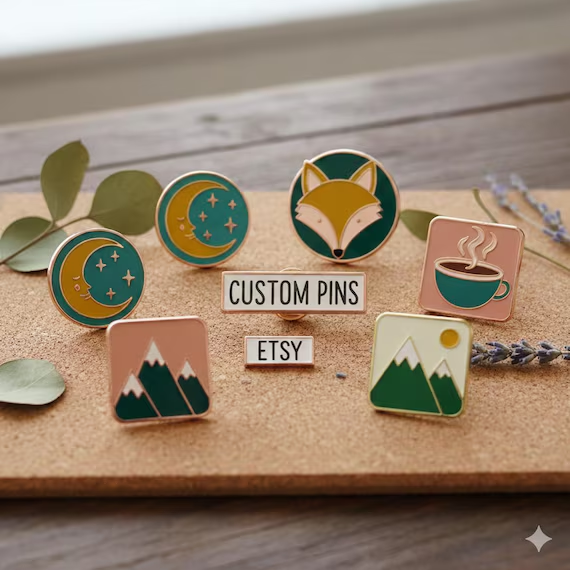
They should start with what the wearer wants to signal, not what the brand wants to say. Minimal shapes, clever icons, local references, and limited-edition designs tend to perform better than oversized logos.
They should also keep legibility in mind. Fine text and complex gradients rarely read well on a small pin, especially from a distance.
Are enamel pins still popular, or have trends shifted?
Enamel pins remain popular, but the trend has matured. People are more selective, and “collectible quality” matters more than novelty.
Soft enamel still suits bold designs and budgets, while hard enamel tends to look more premium for corporate or gift-style use. Some brands also use printed pins for photographic detail, but wear resistance should be considered.
Do pins work for younger audiences in 2026?
They can, but only if they match the audience’s aesthetics and values. Younger audiences are quick to reject anything that feels overly corporate or performative.
Pins that connect to a cause, local identity, fandom-style design language, or limited drops can work very well. If the pin feels like merch rather than marketing, uptake improves.
How can they measure whether promotional pins are actually working?
They should define the job the pin is meant to do. If it is brand recall, they can survey event attendees later. If it is community building, they can track participation or sign-ups linked to distribution.
Practical tracking helps. A QR code on the backing card, a unique landing page, or a short URL tied to the campaign can show whether the pin prompted action, not just smiles at the stand. See difference between shoulder epaulettes and standard accessories.
What are the biggest mistakes organisations make with pin badges?
The biggest mistake is treating pins as filler, ordering the cheapest option, and putting a logo on it without a concept. That leads to low wear rates and wasted spend.
Another common mistake is poor distribution. If they hand them out to everyone, they become disposable. If they make them earned, such as for volunteering, attending a session, or completing a challenge, they become valued.
Are lapel pins cost-effective compared with other promotional merchandise?
They are often cost-effective because they are small, durable, and easy to store and ship. A pin can deliver repeated impressions across many outings, which improves value over time compared with one-time-use items.
However, they should not cut quality too far. A slightly higher unit cost can increase wearability, and wearability is where the return comes from.
What is the best way to use pins in a campaign in 2026?
They work best as part of a system: pin plus story plus next step. The pin should represent something specific, the story should explain why it matters, and the next step should be easy to take.
A simple approach is to pair the pin with a well-designed backing card that includes a short message and a clear call to action. If the pin is meant to be worn, the campaign should make wearing it feel rewarding.
So, are promotional lapel pins and pin badges still effective in 2026?
Yes, they are still effective in 2026 when they are designed for the wearer and used with a clear purpose. Pins succeed when they feel meaningful, look good in real life, and are distributed in a way that makes them worth keeping.
If an organisation wants a promotional item that can live beyond the event day, a well-made pin badge remains one of the simplest, most reliable options.
FAQs (Frequently Asked Questions)
Are promotional lapel pins and pin badges still effective marketing tools in 2026?
Yes, promotional lapel pins and pin badges remain effective in 2026 when treated as a meaningful brand experience rather than cheap giveaways. They offer ongoing visibility and repeat impressions by being items people choose to keep, wear, and talk about long after events.
Why do lapel pins work better than many other promotional items that get ignored?
Pins work because they feel like an expression of identity rather than blatant advertising. Well-designed pins signal causes, communities, or roles, encouraging wearers to display them proudly. They also spark micro-conversations, turning the pin into a social trigger instead of just branded merchandise.
Which types of organisations benefit most from using promotional lapel pins?
Organisations focused on community, membership, participation, or reputation gain the most from pins. This includes charities, universities, professional associations, unions, museums, festivals, clubs, and public sector teams. Pins also suit brands running ambassador programmes or in-person campaigns needing visible markers of belonging.
What makes a lapel pin badge ‘effective’ in 2026 marketing campaigns?
Effectiveness comes from wearability and meaning. The best pins have strong concepts with clean designs at a small size and a premium finish that encourages people to wear them voluntarily. Cheap-looking pins deter wearers and reflect poorly on the brand.
How should lapel pins be designed to ensure people actually wear them?
Design should prioritise what the wearer wants to signal rather than the brand’s message. Minimal shapes, clever icons, local references, and limited-edition designs perform better than oversized logos. Legibility is crucial; fine text and complex gradients rarely read well on small pins.
How can organisations measure whether their promotional lapel pins are achieving desired results?
Measurement depends on the pin’s purpose—brand recall can be assessed through post-event surveys; community building through tracking participation or sign-ups linked to distribution. Practical tools like QR codes on backing cards or unique landing pages help track if the pin prompted further action beyond initial engagement.
